
Indian golfers Gaganjeet Bhullar, Karandep Kochhar, and Shiv Kapur are set to compete against a formidable international field, including Major champions Rory McIlroy and Ryan Fox, at the DP World India Championship in New Delhi. The tournament, featuring seven Major champions, will test the Indian contingent's recent form and experience on home turf.

Leading appliance and consumer electronics manufacturers are set to increase prices of air conditioners, LED TVs, washing machines, and other products by 5 to 8 per cent from October 1, citing rising input costs for metals like copper and steel, crude derivatives, and currency exchange volatility due to the West Asia crisis.

Bengaluru golfer Khalin Joshi secured his third title of the season, winning the inaugural Rs 1 crore Nava Raipur Open 2026 Golf tournament. He finished with a bogey-free three-under 31 in the final nine-hole round, overcoming weather delays and tough competition to claim the victory by one stroke.
Bullish on the Indian market, National Panasonic India, is tracking a turnover growth of over 55 per cent in the current fiscal, and plans to launch three new cellular phone models in the country soon.
Consumer durables player, Panasonic India, plans to set up its first manufacturing unit in India. It has shortlisted three locations for the factory -- Chennai, Pune and Gurgaon -- and is soon expected to take a final call in this regard.

Currently, Panasonic India comes under the company's Singapore-based establishment. Other global regions of the Japan-based firm are based out of Japan, North America, Asia, Europe and Latin America.
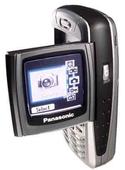
Panasonic India, the consumer durables and electronics major, on Monday announced the launch of its new camera phone Panasonic X300.

Japan's consumer electronics major Panasonic plans to double its headcount in India to 20,000 in next two years with the commissioning of its new manufacturing facility at Jhajjar in Haryana.

The company said it would hire 2,150 this year and top it up with another 3,850 in 2012, in contrast to Panasonic Corp's massive job cuts plan by 2013.

Unlike their struggles elsewhere, Japanese majors Sony and Panasonic show no sign of fatigue in India, as consumers continue to lap up their products here.

The Japanese giant wants to focus on segments outside its core business
Japanese consumer durables firm Panasonic on Tuesday said it is looking at technical collaboration with several Indian firms, including the Tata Group, to develop India-specific products, underlining that the country is one of its significant markets.

The Anchor and Panasonic connection is a blend of legacy and quality and there really is no question of substituting one for the other. Panasonic is banking on Anchor's familiarity and widespread recall, to push its way ahead in the premium, automation-aided home appliances and accessories market.

Mohammad Siddikur of Bangladesh birdied the last hole for a five-under-par 67 to pull clear from the chasing pack at the halfway stage of the Panasonic Open India on Friday.

The appliance makers expect a good churn in the festive season, led by the government's proposal to reduce the GST slab on air-conditioners from the current 28 per cent to 18 per cent, which will reduce the price from Rs 1,500 to Rs 2,500 depending on the models.

Consumer electronics major Panasonic on Monday announced the setting up of an internal division, Panasonic Automotive Systems India, to focus on the Indian automotive sector.

Panasonic on Wednesday entered the notebook computer market in India with the launch of six models targeted at the verticals where wear and tear is high.

'India can be the next growth leader for us.'
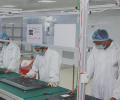
Electronics manufacturing services firm Dixon Technologies is setting up a Rs 1,000-crore facility near Chennai and signed a Memorandum of Understanding with the Tamil Nadu government on Wednesday. The factory, which will come up at Oragadam in neighbouring Kancheepuram district, is expected to generate 5,000 jobs in the region, the state government said.
Is Panasonic P51 worth buying for Rs 22,500? In terms of design, performance, camera and battery it is worth buying, but memory and processor speed are not up to the mark as compared to its competitors (Samsung Galaxy S III, LG Optimus Vu).
Local favourite Digvijay Singh closed with a flawless six-under-par 66 to end an agonizing 12-year wait for his maiden Asian Tour title at the Panasonic Open India in New Delhi on Sunday.

Artificially intelligent smartphones will be able to offer solutions and suggestions based on user behaviour.

Panasonic India is set to increase the prices of its products by up to 7 per cent, while some others players have already increased it.

Top companies across sectors -- automobile maker Maruti Suzuki, consumer electronics giant Samsung to IT giant Infosys -- have reopened factories and offices as India took its first steps towards resuming economic activity after weeks under a near-total coronavirus lockdown.

Industry leaders on Thursday mourned the death of Ratan Tata saying with his demise India has lost a visionary who shaped its industrial and philanthropic landscape. Tata was a truly remarkable business leader who placed the country before business interests, and whose vision was truly transformational for a country and its people, TVS Motor Co Chairman Emeritus Venu Srinivasan said in a statement. "Mr Tata was a truly remarkable business leader, the likes of whom nations get only once in a century," he added.

LG, Panasonic: Making in and for India LG and Panasonic are looking to revive their fortunes in India by building local insights into their new products.

The Rs 1.5-trillion-a-year industry has ended the year with a 30 per cent fall in sales because after a steady recovery in the festive season, multiple factors dashed its hopes of revival at the end of the year.

Consumer durable firms, including Haier, Whirlpool, Panasonic, Godrej Appliances and Daikin, are increasing prices of their products by up to 5 per cent following the withdrawal of excise duty sops, coupled with high input costs.
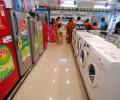
The industry is expecting double-digit growth on a year-on-year basis, helped by a possible price correction after softening of raw material inputs and factors such as positive sentiments, pent up demand and improving economic conditions. Besides, a shift in consumer behaviour from price consciousness towards technologically advanced premium products with quality, value proposition and safety aspects leading to a rise in demand for home automation products is making the industry upbeat. With the government's production linked incentive (PLI) scheme for white goods, which has witnessed a committed investment of Rs 4,614 crore, in place, many manufacturers are gearing up to make the most out of the opportunity as well as take steps towards reducing their dependency on imports and make products more affordable.

Top firms get GST notices on credit claims on Friday; replies sought within hours.

'Companies like Tesla and others have been given a long rope in India.'

But it may come with a downside risk of further rise in prices of several products.
Some companies argue that the culture of staying, working and learning at home will persist for a while, altering lifestyle habits of consumers.

Experts say launches would pick up pace from mid-March.
The stock of Dixon Technologies (India), the country's largest listed electronic manufacturing services (EMS) player, was up 6 per cent in 10 trading sessions, boosting the gains over the last three months to 21 per cent. The gains came following reports that Dixon will produce laptops in India in partnership with US and Chinese firms under the production-linked investment (PLI) scheme. It recently signed an agreement to make smartphones for Xiaomi India.

French aerospace major Thales Group is eyeing major expansion in India. The group has started planning to set up a maintenance, repair, and overhaul (MRO) organisation in India to support Indian airlines - many of which are its customers for avionics support. "We are looking to set up an MRO, so that they don't have to travel to West Asia or Singapore. "Final decision is yet to be taken, but this is a clear intent showing the growth potential in India that we are looking to set up a sub-centre here," said Yannick Assouad, executive vice-president, avionics at Thales, who was on her maiden visit to the group's India office at Bengaluru since taking charge.

From the customer point of view too, LFP batteries are safer and offer a longer life.

As Covid-19 cases surge in India, companies have realised it's a tightrope walk between maintaining production and ensuring employee safety.
